



Circuit de Barcelona-Catalunya w/o Chicane
The Circuit de Barcelona-Catalunya is a world-class racetrack born in 1991 for hosting the Formula 1 Spanish Grand Prix in Montmeló, a suburb of Barcelona, Spain. The privileged temperate Mediterranean climate of La Ciudad Condal (the City of Counts) allows racing throughout the year with an average temperature of around 15 degrees Celsius (59 degrees Fahrenheit), with hot summers and mild winters. This fact, combined with the massive influx of tourists in the region, makes the Circuit de Barcelona-Catalunya a staple part of other high-profile motorsports events like the European Le Mans Series, the MotoGP, or the FIM Superbike World Championship, to name a few.
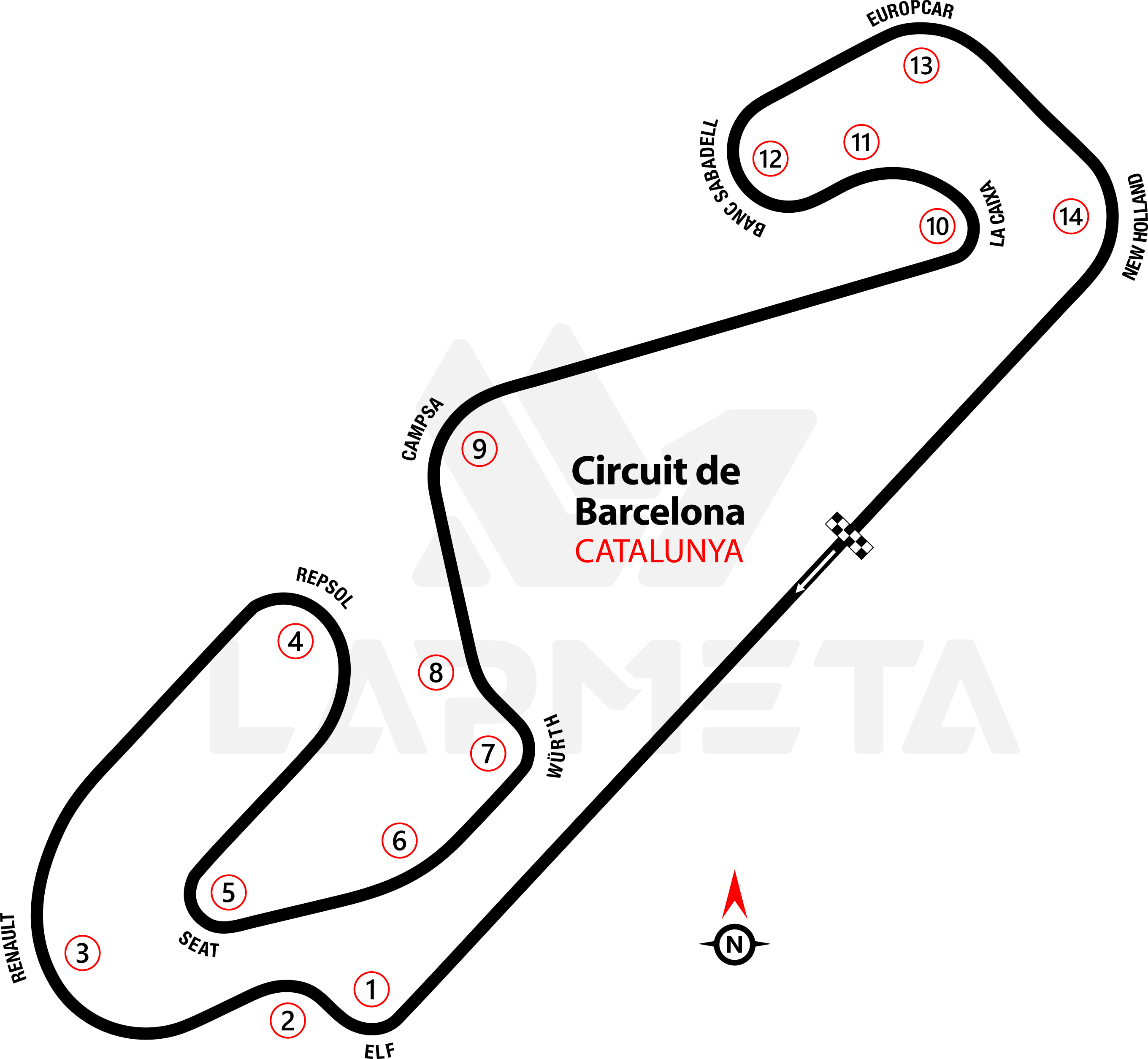
The total length of the Barcelona-Catalunya raceway is 4.675 km (2.905 mi), consisting of a 1 km (0.62 miles) front straight on the southeastern side and 16 turns of varying angles on the northwestern side. The start/finish line lays in the middle of the main straight. The first turn is called ELF and is a 90-degrees right-hander followed by a left-right sweeping turn combination. At turn number 4, Repsol, drivers steer heavily to the right and, after a short straight, they take another challenging turn in the opposite direction. Turns six to nine are fast sweepers, and the track's second-longest straight comes right after then, between turns nine and ten, known as La Caixa. The six remaining turns include a chicane and get the speed down as riders need to focus on good maneuvering to avoid hitting the curbs.
The Circuit de Barcelona-Catalunya configuration without chicane represents the original full-throttle layout before chicane additions interrupted the circuit's high-speed sections, delivering the uninterrupted flow that characterized the facility when it opened in 1991. Located in Montmelo near Barcelona in Catalonia, Spain, this variant removes the chicane modifications installed for safety and speed reduction purposes, restoring the sustained high-speed character through sections where modern configurations insert technical braking zones. The without-chicane layout emphasizes pure speed and aerodynamic efficiency over the stop-start rhythm created by chicane additions, providing a different challenge that rewards horsepower and aero performance.
Operating without the chicane showcases Barcelona-Catalunya's original design philosophy before safety considerations and FIA requirements led to track modifications. The uninterrupted layout creates higher average speeds and different tire degradation patterns, with sustained high-speed corners generating more thermal stress than the chicane-interrupted variant where braking zones allow cooling. Spain's Mediterranean climate creates ideal racing conditions across much of the season, though summer track temperatures can exceed 55C during afternoon sessions. The without-chicane configuration serves primarily testing and track day events rather than modern championship racing, with Formula One and MotoGP utilizing the current chicane-equipped layout that meets contemporary safety standards while the original flow remains available for historical demonstrations and events prioritizing speed over safety margin compromises inherent in chicane additions.
Class Podiums
Circuit de Barcelona-Catalunya w/o Chicane is 4.7 km, 14 turns, clockwise. Fastest recorded lap: 1:39.900 (Ferrari 488 GT Modificata).
Frequently asked questions
How long is Circuit de Barcelona-Catalunya w/o Chicane?
Circuit de Barcelona-Catalunya w/o Chicane is 4.7 km (2.9 mi) long.
How many turns does Circuit de Barcelona-Catalunya w/o Chicane have?
Circuit de Barcelona-Catalunya w/o Chicane has 14 turns.
Which direction does Circuit de Barcelona-Catalunya w/o Chicane run?
Circuit de Barcelona-Catalunya w/o Chicane runs clockwise.
What is the lap record at Circuit de Barcelona-Catalunya w/o Chicane?
The fastest recorded lap at Circuit de Barcelona-Catalunya w/o Chicane is 1:39.900 in a Ferrari 488 GT Modificata.