
Chuckwalla Valley Raceway CW
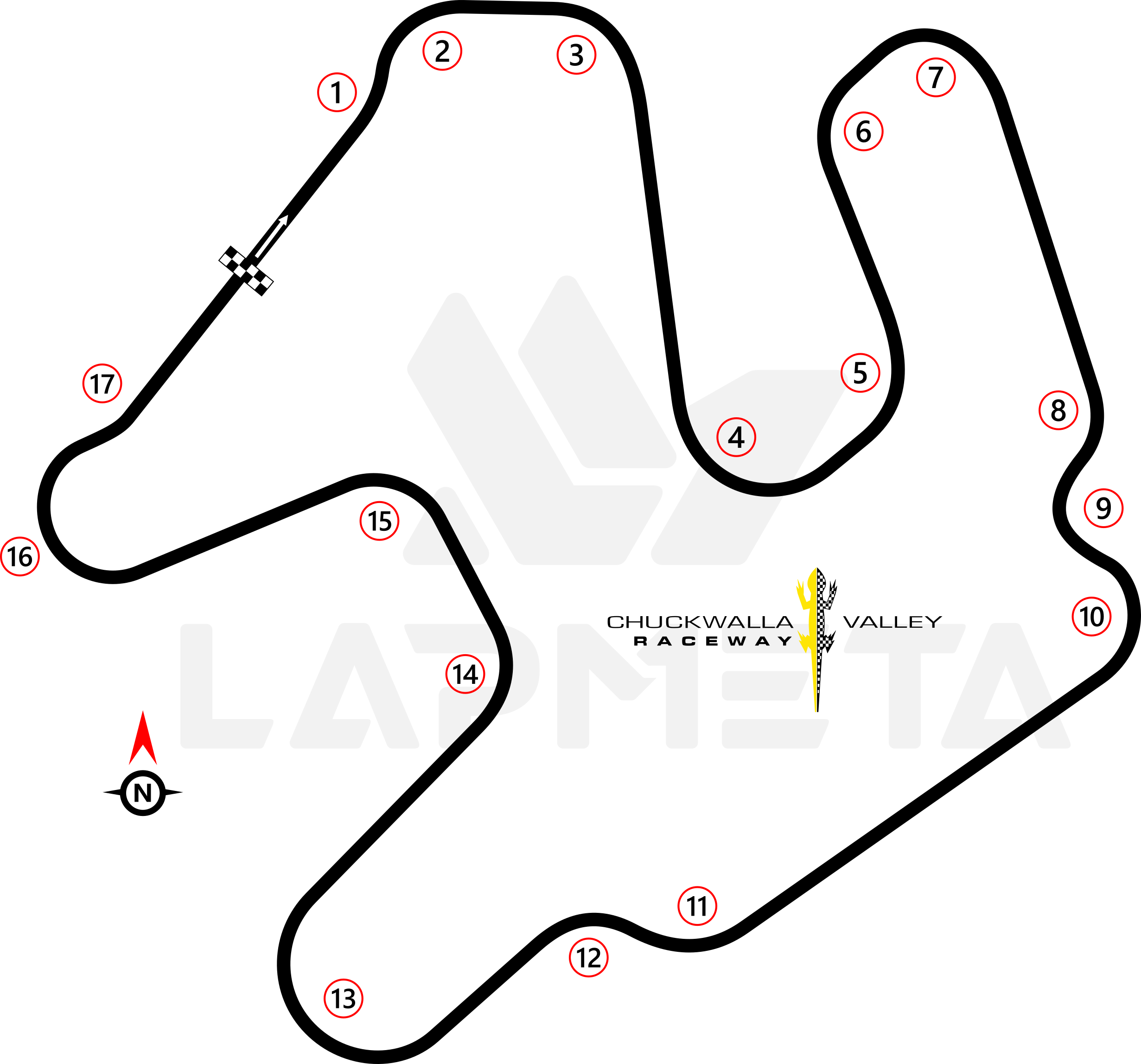
Chuckwalla Valley Raceway CW is 4.3 km, 17 turns, clockwise. Fastest recorded lap: 1:43.500 (Mazda Miata MX-5 ND 2022).
The Chuckawalla Valley Raceway is a motorsports park located in Desert Center, California. It is a 3-1/2 hours road trip away from all the major population centers in the area. The town gained historical relevance in 1942 when General Patton used it as a desert combat training ground for the American tank battalions assigned for fighting in the Sahara during WW2. Temperatures as high as 120 °F and only occasional winter rains configure a barren climate where only the most resilient forms of life can thrive. But even in this harsh location, passion for racing has been going strong and well since its inception in 2010.
The road course is full of exciting corners with different banking angles. There are 17 turns in total on the 2.68-mile trajectory of the track. It can be run both clockwise and counterclockwise, and elevation changes are constant, as in the 24' vertical gain in the main 1330-feet straightaway. A famous feature in Chuckwalla Valley is The Bowl in turn 13, a 10-degree banked fishbowl-shaped corner that drivers can take at high speeds to feel the G-forces working. The racetrack designer Ed Bargy used the concept of a challenging, fast-to-drive, yet secure racetrack that makes the trip to Chuckwalla Valley more than worth it.
Chuckwalla Valley Raceway's clockwise configuration delivers 4.313 kilometers of Colorado Desert high-speed challenge through 17 turns carved into 405-hectare former WWII training grounds near Desert Center, California, 145 kilometers east of Palm Springs. This counterintuitive CW direction reverses the traditional counterclockwise layout, transforming driver approach to every corner including the iconic Bowl—a high-banked sweeping turn taken at 145+ kph that becomes an entirely different challenge when traversed opposite to muscle memory. The clockwise routing creates 79 mph average speeds across the 405-meter main straight where elevation gains 7.3 meters, building momentum into Turns 11-12's sweeper complex before drivers attack the Bowl at Turn 13 carrying maximum commitment through banking designed for opposite-direction G-loading.
The CW configuration's character derives from mental recalibration and reversed reference points across desert landscape. Chuckwalla's original CCW direction creates institutional knowledge among Southern California club racers, but clockwise routing deletes familiar brake markers and apex locations instantly. The 17-turn layout's constant elevation changes—rising and falling across ancient dry lakebed terrain where General Patton trained tank divisions—work opposite to expectations, while desert heat creates surface temperatures regularly exceeding 65°C in summer months affecting tire grip dramatically. The Bowl's high banking, designed for CCW centrifugal forces, requires different lines and speed management when taken clockwise, separating brave experimentation from cautious approaches. Mojave Desert isolation 32 kilometers from Interstate 10 preserves the facility's remote character, while track day organizations and club racing groups utilize clockwise configuration for variety and driver development. Chuckwalla CW particularly challenges experienced CCW veterans who've internalized traditional direction so deeply that reversing transforms familiar circuit into exploration of new brake zones and corner geometries despite identical physical layout.
Chuckwalla Valley Raceway averages 42°C highs in July and 8°C lows in December, and little rain. The driest, most reliable track-day weather runs October–May.
10-yr monthly averages Rain days Driving season