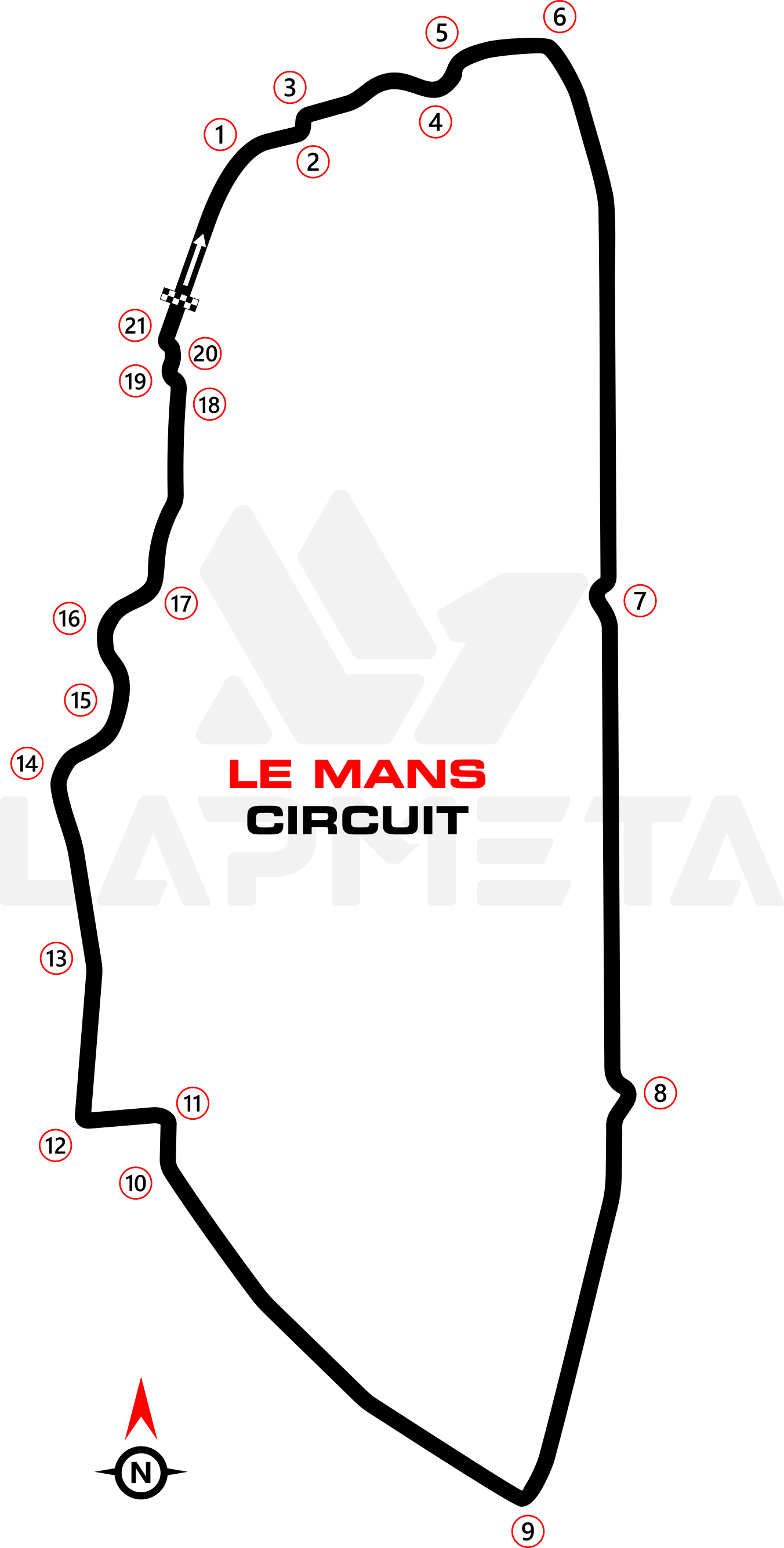

Le Mans Circuit de la Sarthe
Le Mans Circuit de la Sarthe 13.6 km, 21 curvas, en sentido horario. Vuelta más rápida registrada: 3:14.791 (Toyota TS050 Hybrid).
The 24 Hours of Le Mans is the quintessential endurance race event, one of the most important competitions in Motorsports, held every year since 1929 (with a 10-year pause from 1939 to 1949) at the Circuit de la Sarthe in Le Mans, France. For being successful at Le Mans, a racecar needs to develop higher speed and, at the same time, to have outstanding reliability under long-distance racing conditions. The winner is the team that covers the most distance in 24 hours. The race runs in summer, with a high temperature and occasional rain getting the track surface wet.
The 11-turn, 2.6-mile Circuit de la Sarthe in its current configuration is a highly technical layout offering a wide array of features that keep professional racers engaged the whole time they are behind the wheels. To get an average speed of 79 mph (127 km/h) on this difficult-to-maneuver circuit needs a fully-focused and experienced driver, let alone the particularities of completing the challenging 24 hours of nonstop racing. Teams replace drivers every 1-2 hours, but the precise interval depends on the team strategy. The whole trajectory is spectacular to the eye and fun to drive, with a different kind of challenge at every corner, a lot of overtaking opportunities, and an addictive experience every motorsports fan needs to take a look to.
The 24 Hours of Le Mans circuit, officially known as Circuit de la Sarthe, is one of the most iconic and demanding tracks in motorsport—a sprawling 13.6-kilometer mix of permanent raceway and closed public roads that turn the French countryside into a cathedral of speed each June. Its character is defined by contrasts: the precision of the Porsche Curves against the endless full-throttle blasts of the Mulsanne Straight, the glow of pit lane under floodlights against the darkness of rural villages at 3 a.m. It’s a circuit where engineering, endurance, and human will converge, where drivers hit over 330 km/h past restaurants and farmhouses that return to everyday life the next morning. More than a track, it’s a living stage for history—ever evolving, yet still echoing with the legends of Fangio, McQueen, and the duels of Ford versus Ferrari.
Le Mans promedia 8-25°C con máximo de lluvia invernal y mejor temporada de pista marzo-octubre cuando llueve menos y temperaturas alcanzan 13-25°C.
Promedios mensuales de 10 años Días de lluvia Temporada de conducción