
Nürburgring VLN
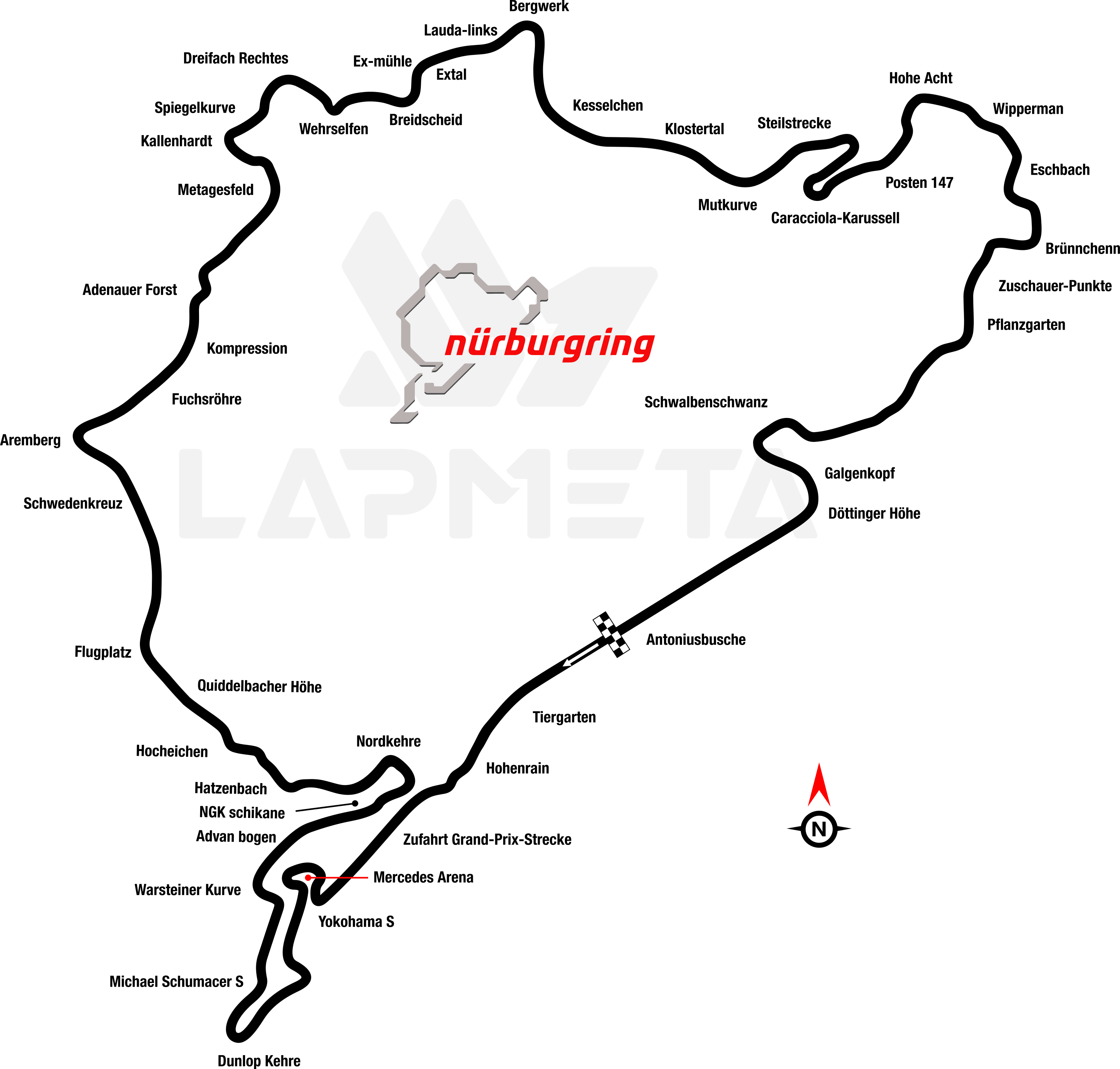
Nürburgring VLN 25.8 km, 186 curvas, en sentido horario. Vuelta más rápida registrada: 7:53.150 (BMW M6 GT3 2021).
El complejo de automovilismo de Nürburgring está ubicado en Nürburg, Renania-Palatinado, Alemania, enclavado en las montañas Eifel aproximadamente 70 kilómetros al sur de Colonia. Nacido de un ambicioso proyecto de alivio del desempleo de los años 1920, la instalación fue inaugurada el 18 de junio de 1927, presentando el legendario Nordschleife (Circuito Norte) y el ahora desaparecido Südschleife (Circuito Sur). El Gesamtstrecke original (circuito combinado) medía 28,265 kilómetros, estableciendo el Nürburgring como uno de los lugares más exigentes del automovilismo. La leyenda de la Fórmula Uno Jackie Stewart acuñó el apodo perdurable "El Infierno Verde" tras su victoria en el torrencial Gran Premio de Alemania de 1968, donde la niebla densa y la lluvia incesante transformaron el circuito en un desafío de supervivencia que puso a prueba el coraje del piloto tanto como su habilidad.
El complejo experimentó una transformación dramática tras el accidente casi fatal de Niki Lauda en 1976, que destacó las inadecuaciones de seguridad inherentes al diseño original. La Fórmula 1 abandonó el Nordschleife después de 1976, lo que llevó a la construcción del moderno circuito de Gran Premio de 5,148 kilómetros en 1984. Hoy, el Nürburgring opera tanto como lugar de carreras profesionales como instalación de conducción pública a través del programa Touristenfahrten (conducción turística), dando la bienvenida a cualquiera con vehículos legales para experimentar el legendario Nordschleife de marzo a noviembre. El precio actual de vuelta es de €30 entre semana y €35 los fines de semana, mientras que los entusiastas dedicados pueden comprar pases de temporada anuales por €3,000, proporcionando acceso ilimitado tanto al Nordschleife como al circuito de Gran Premio durante toda la temporada de operación.
La configuración VLN del Nürburgring representa el diseño definitivo de carreras de resistencia, combinando los legendarios 20.8 kilómetros del Nordschleife con una porción significativa del moderno GP-Strecke para crear un formidable circuito de 25.378 kilómetros. Este diseño combinado sirve como sede del campeonato de resistencia Nürburgring Langstrecken-Serie (NLS, anteriormente VLN) y las prestigiosas ADAC 24 Horas de Nürburgring, una de las carreras de resistencia más exigentes del mundo. La conexión entre los dos circuitos ocurre en la curva Yokohama-S, evitando deliberadamente la sección Mercedes Arena del circuito GP para mantener un flujo óptimo para las carreras de resistencia.
La extraordinaria longitud y complejidad de esta configuración crean desafíos únicos para equipos y pilotos. Con 186 curvas que combinan los traicioneros cambios de elevación del Nordschleife, crestas ciegas y zonas de compresión con los estándares modernos de seguridad del circuito GP y secciones técnicas, el diseño VLN exige conocimiento integral del circuito y estrategias de configuración adaptables. El cambio de elevación vertical de 305 metros a lo largo de la vuelta crea niveles de agarre y temperaturas de freno constantemente variables, mientras que las condiciones climáticas pueden diferir dramáticamente entre la sección boscosa del Nordschleife y la porción más abierta del GP. Las velocidades promedio alcanzan 175 km/h a pesar de la naturaleza técnica del circuito, testimonio de las secciones de alta velocidad como Döttinger Höhe en el Nordschleife y las rectas extendidas del circuito GP.
El papel de la configuración VLN en las carreras de resistencia la ha convertido en un campo de pruebas esencial para fabricantes que desarrollan autos de carretera y tecnología de carreras. La combinación de rectas largas para pruebas de velocidad máxima, complejos de curvas técnicas para evaluación de manejo, y la naturaleza implacable del Nordschleife crea lo que muchos consideran la prueba automotriz más completa en el automovilismo. La carrera anual de 24 horas atrae más de 200 participantes en múltiples clases, desde máquinas GT3 casi prototipo hasta autos de turismo basados en producción, todos compartiendo la pista en un espectáculo que prueba confiabilidad, estrategia y resistencia del piloto durante un día y noche completos de carreras en uno de los circuitos más desafiantes del mundo.
La estación de conducción óptima es de mayo a octubre con temperaturas de 15–21 °C, mientras que invierno es frío (3–4 °C) y húmedo con hasta 15 días de lluvia.
Promedios mensuales de 10 años Días de lluvia Temporada de conducción