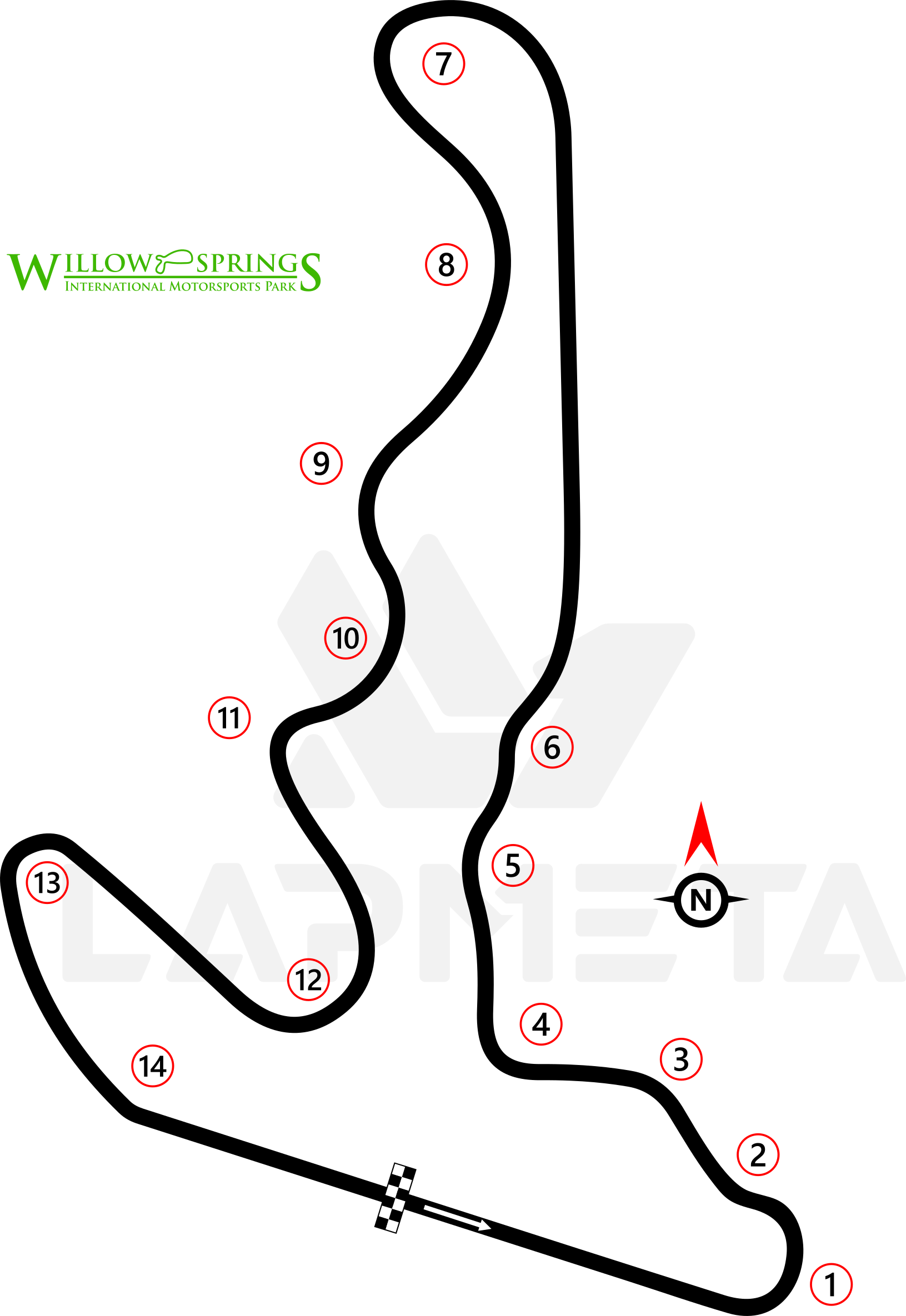

Willow Springs Raceway Streets CCW Pre 2022
Willow Springs Raceway Streets CCW Pre 2022 2.5 km, 14 Kurven, gegen den Uhrzeigersinn. Schnellste gemessene Runde: 1:16.370 (Porsche 991.1 GT3 2016 (w/EagleF1S)).
Die Willow Springs Raceway, eine der ältesten permanenten Rennstrecken in den Vereinigten Staaten, wurde 1953 mit der gleichen Konfiguration geboren, die heute auf der Hauptstrecke verwendet wird, am Rande von Rosamond, anderthalb Autostunden nördlich von Los Angeles. Rund um die alte Strecke, auch bekannt als Big Willow, entstand ein vollwertiger Motorsportpark mit zusätzlichen Rennstrecken, Ovalkursen und Fahrertrainingsanlagen. Willow Springs liegt im westlichsten Teil der Mojave-Wüste, 769 m über dem Meeresspiegel. Das Klima ist trocken mit intensivem Sonnenschein, drückend heißen Sommern, milden Wintern und nahezu nicht vorhandenem Regen.
Der Big Willow ist die wichtigste 2,5-Meilen (4,02 km) lange Strecke in Willow Springs und hat in der Vergangenheit mehrere NASCAR Series Rennen ausgetragen. Es ist das schnellste Layout im Park mit einer unglaublichen Durchschnittsgeschwindigkeit von 97 mph (156 km/h). Der Big Willow hat enge Kurven, dramatische Höhenunterschiede, schnelle Sweeper und eine lange Gerade zum Beschleunigen bis zur Ziellinie. Die andere Rennstrecke, die im Motorsportpark erwähnenswert ist, ist "The Streets of Willow Springs". Sie liegt nördlich von Big Willows und hat eine Gesamtlänge von 1,8 Meilen (2,89 km) und ein etwas komplizierteres Layout mit 14 Kurven. Die durchschnittliche Geschwindigkeit für Rennen auf The Streets beträgt etwa 75 mph (120 km/h) für beide Uhrzeigerrichtungen.
The Streets of Willow Springs circuit in counterclockwise pre-repave configuration represents a historical double-variant combining reversed direction with original surface before the comprehensive 2025 renovation transformed California's technical street-emulation course. Running CCW on the pre-September 2025 asphalt, this configuration combined directional reversal with weathered surface characteristics accumulated across decades of Mojave Desert temperature extremes. The counterclockwise flow completely altered familiar corner approaches from standard clockwise operation, while the original surface provided authentic worn public road characteristics with bumps and undulations that added character but reduced ultimate grip compared to fresh asphalt.
Operating counterclockwise on the pre-repave surface created a unique double-challenge for drivers accustomed to Streets' clockwise flow on newer pavement. The reversed direction transformed braking reference points and apex sighting while navigating the 1.6-1.8 mile configuration, with the aged surface adding unpredictability through variable grip zones that shifted throughout sessions. The pre-2025 layout included cross-over connections linking the straight to Turns 4 and 6, infrastructure eliminated during the 2025 reconstruction that added three new chicanes. Desert heat frequently pushed the old asphalt above 60C in summer, causing the weathered surface to become greasy and unpredictable, while winter sessions offered cold-grip challenges. This CCW pre-repave configuration served as ultimate preparation for drivers developing skills transferable to variable-surface street driving and autocross events.
Willow Springs erlebt milde Winter (4–14°C), heiße Sommer (36°C) und die beste Fahrsaison von April bis Juni mit 24–33°C und minimalen Regentagen.
10-Jahres-Monatsmittel Regentage Fahrsaison