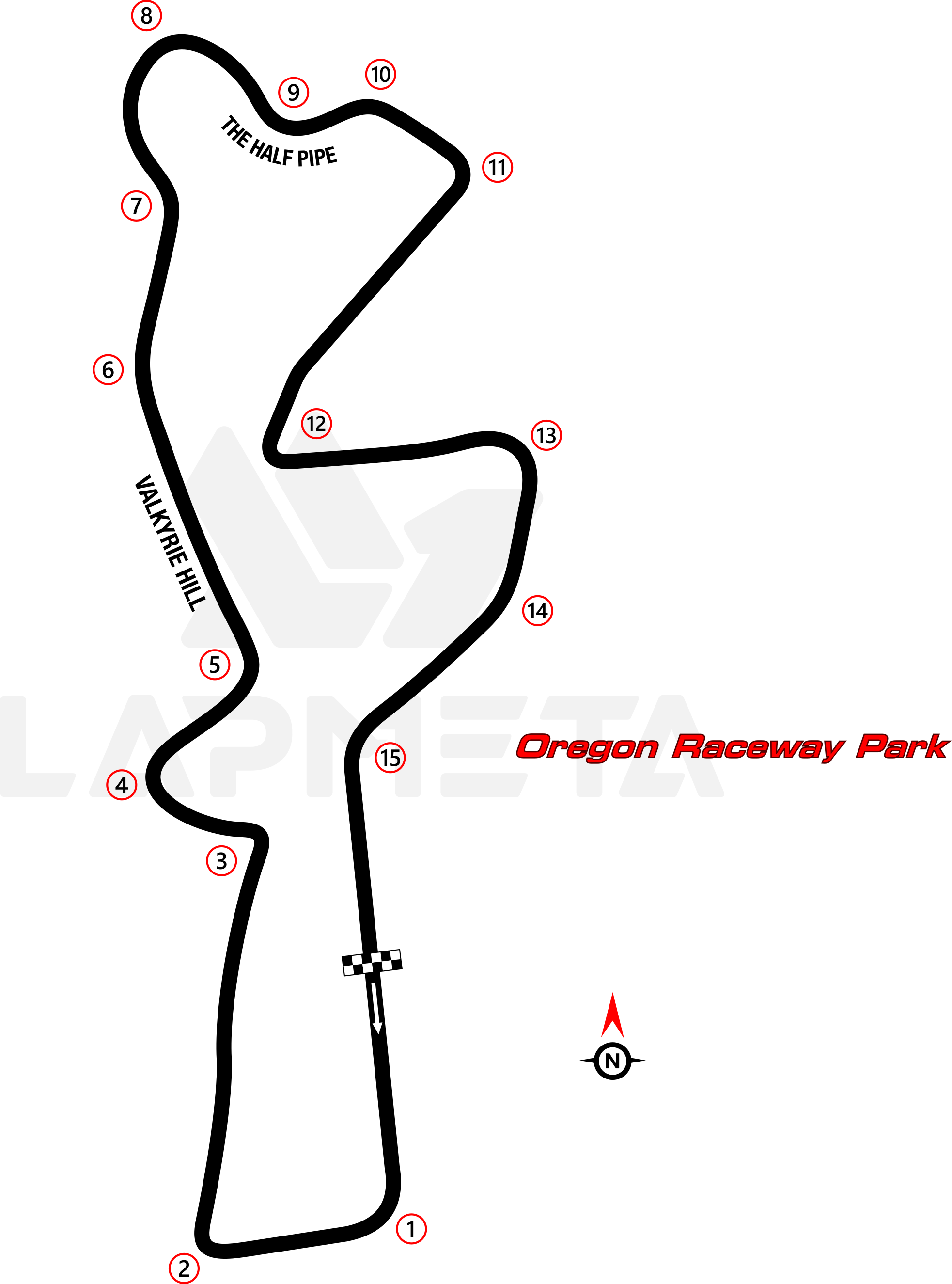

Oregon Raceway Park CW
Oregon Raceway Park (ORP), located in Grass Valley, Oregon, is a premier road racing circuit in the Pacific Northwest. Built in 2007, ORP was designed by Ralph Wilson and quickly became a favorite among drivers for its challenging and technical layout.
The track boasts a 2.3-mile (3.7 km) main course with 12 turns, featuring significant elevation changes and a variety of corner types. These include sweeping high-speed bends, tight hairpins, and challenging esses, demanding a balance of power and handling. The elevation change of over 300 feet throughout the lap adds to the complexity, rewarding drivers who can master the track's undulations. ORP also features a shorter 1.9-mile (3.1 km) configuration, often used for testing and smaller events.
ORP's technical characteristics make it suitable for a wide range of motorsport activities. It regularly hosts sports car racing, motorcycle racing, and open-wheel events. Track days are also popular, allowing amateur drivers to experience the circuit in their own vehicles. The track's design promotes close racing and overtaking opportunities, making for exciting spectator events.
What sets Oregon Raceway Park apart is its location and the overall experience it offers. Situated in a rural, scenic setting, ORP provides a tranquil escape from urban life. The track's commitment to safety and well-maintained facilities further enhance its appeal. The challenging layout, combined with the stunning backdrop of the Oregon landscape, makes ORP a truly unique and memorable racing destination.
Oregon Raceway Park's clockwise configuration delivers 3.701 kilometers through the facility's reversed racing direction, located in Grass Valley, Oregon, where the 2009-opened circuit features blind uphill turns and tricky downhill entries carved into spectacular Pacific Northwest landscape with views of Mount Hood and Mount Rainier. This CW routing reverses the traditional counterclockwise flow across the 2.3-mile technical layout, transforming The Valkyrie Hill section and various elevation-masked corners into opposite-direction challenge where all brake markers, apex selections, and crest-commitment points work backwards from CCW muscle memory. The clockwise direction affects the circuit's technical character where blind turns and elevation transitions designed for counterclockwise create different sight lines and weight-transfer dynamics when traversed opposite direction, serving as advanced driver development variation for Oregon's premier road racing venue.
The CW configuration's character emerges from reversed approach to circuit designed primarily for counterclockwise racing. The technical layout's blind uphill turns become downhill entries when reversed, while downhill entries transform into uphill challenges, fundamentally changing weight transfer and brake-turn-throttle timing throughout the lap. Oregon's Pacific Northwest climate creates year-round racing opportunities with frequent rain affecting reversed-direction grip levels differently than standard CCW flow, while scenic mountain views provide dramatic backdrop contrasting urban-adjacent circuits. The facility's two crossover roads near Valkyrie Hill enable layout variations and direction changes serving varied event needs. SCCA, NASA, motorcycle racing, and track day organizations utilize Oregon Raceway Park with both CW and CCW configurations available though counterclockwise remains primary direction. The CW variation particularly challenges regular visitors who've internalized CCW brake markers across the technical elevation-intensive layout, forcing reliance on visual cues and chassis feedback rather than memorized reference points across Pacific Northwest's premier purpose-built road racing facility offering dual-direction capability in spectacular mountain-view setting.