
Sochi Autodrom CW
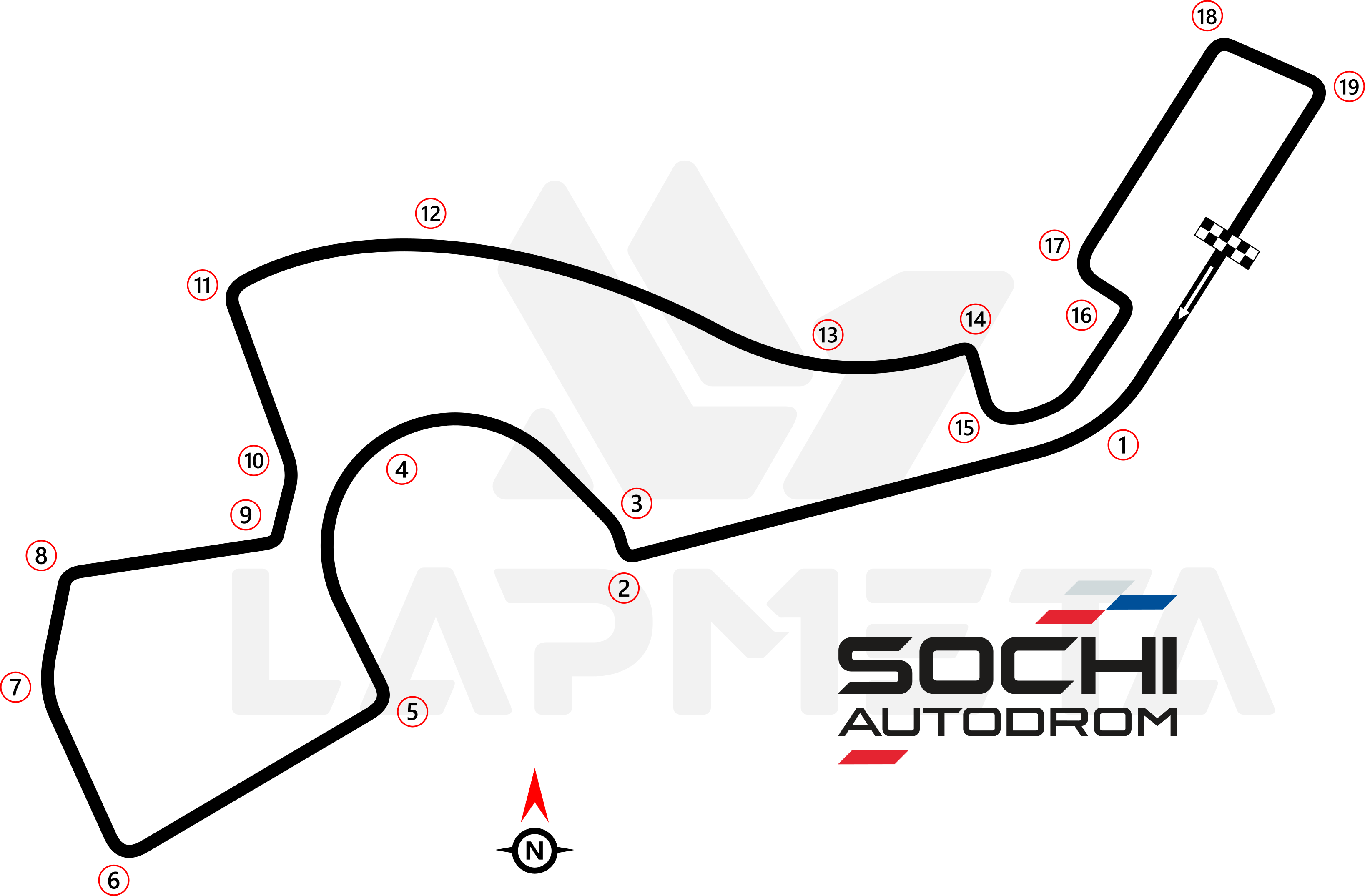
Sochi Autodrom CW 5.8 km, 19 virages, sens des aiguilles d'une montre. Tour le plus rapide enregistré : 1:31.304 (Mercedes W11 2020).
Le Sochi Autodrom est un circuit de course de 3,63 miles (5,84 km) construit autour du Parc Olympique de Sochi, où les Jeux Olympiques d'hiver de 2014 ont eu lieu, à Sirius, le long de la côte de la mer Noire dans le sud de la Russie. L'architecte en charge de la conception du circuit était le célèbre Hermann Tilke, qui a également travaillé sur des circuits de Formule 1 tels que le Red Bull Ring, le Circuit of the Americas ou le Marina Bay, pour n'en citer que quelques-uns. Le Sochi Autodrom est l'hôte du Grand Prix de Russie de Formule 1 depuis 2014 et est une catégorie unique en son genre car c'est un circuit urbain permanent qui a évolué à partir des routes intérieures de la ville olympique.
L'emplacement méridional de Sochi signifie que la ville peut se vanter d'avoir le climat le plus chaud de la Russie, avec des températures moyennes proches de 20°C (68°F), des hivers frais et des étés chauds. La surface de la piste est souvent mouillée toute l'année et il y a des chutes de neige sur le circuit en janvier. Il y a 19 virages dans le Sochi Autodrom, qui présente une disposition difficile à manœuvrer avec un bon équilibre entre les virages à angle fermé et les courbes rapides. Certaines caractéristiques du circuit sont son virage en forme d'oméga de 750 mètres (2460 pieds), ou la combinaison de virages rapides des virages 12 et 13, où les pilotes foncent à 240 km/h (150 mph).
The clockwise configuration at Sochi Autodrom (renamed Sirius Autodrom in April 2024) represents Russia's first purpose-built Formula One facility, delivering 5.848 kilometers of Hermann Tilke-designed asphalt featuring 19 corners (12 right-handers, 7 left-handers) through the Olympic Park complex along Russia's Black Sea coast in Krasnodar Krai. Running clockwise from the start grid on the northern edge of the Olympic Park next to the railway station, the circuit's 13-15 meter width provides multiple racing lines through sections that hosted the World Championship Russian Grand Prix from 2014 to 2021. The clockwise flow emphasized Tilke's characteristic blend of tight technical complexes and medium-speed corners designed to create overtaking opportunities, though critics often noted the circuit's processional racing character compared to classic European venues.
What distinguished Sochi Autodrom's clockwise layout was its integration with 2014 Winter Olympics infrastructure, creating a unique street-circuit-meets-permanent-facility hybrid where grandstands and Olympic venues provided spectator amenities uncommon at purpose-built tracks. The circuit's coastal location created variable weather conditions—Black Sea maritime influence could bring sudden rain or fog, while summer track temperatures often exceeded 50°C on exposed sections. Following international championships' departure from Russia, the circuit underwent dramatic transformation in 2024, with the big circuit being dismantled and only the short layout remaining where Turn 1 connects directly to Turn 13, fundamentally changing the facility's character from international-grade venue to regional motorsport park. The clockwise direction had become familiar to Formula One teams and drivers across eight Grand Prix events, with specific corner combinations like the Turn 2-3 complex and the Turn 13-15 sequence creating the circuit's strategic overtaking zones. Sochi's location in subtropical Russia's warmest region created operating conditions unique among Russian motorsport facilities, though the circuit's post-2021 transformation reflects broader geopolitical changes that ended its Formula One era and reshaped Russian motorsport infrastructure.
Sochi connaît des hivers doux (10–11°C) et humides, des étés chauds (27–29°C) avec la meilleure saison de piste d'avril à novembre, septembre-octobre offrant les conditions optimales avec moins de dix jours de pluie.
Moyennes mensuelles sur 10 ans Jours de pluie Saison de conduite