
Hockenheimring GP
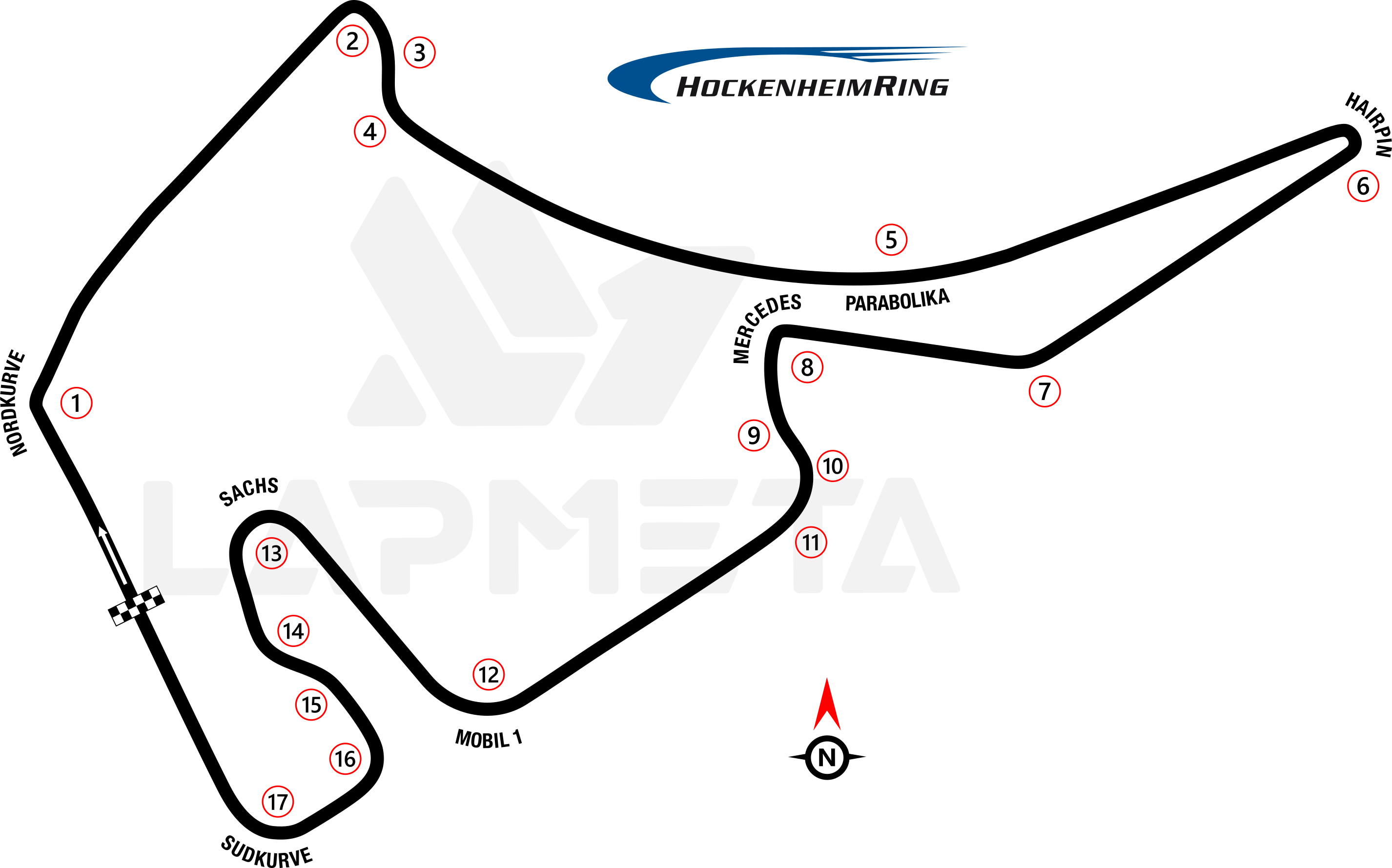
Hockenheimring GP 4.6 km, 17 virages, sens des aiguilles d'une montre. Tour le plus rapide enregistré : 1:11.212 (Ferrari SF71H 2018).
Parler du Hockenheimring évoque le Grand Prix d'Allemagne de Formule 1, l'une des courses les plus prestigieuses du calendrier de la F1, régulièrement organisée soit sur ce circuit, soit sur deux autres sites, le Nürburgring et l'AVUS, Berlin. La ville de Hockenheim, située dans le Bade-Wurtemberg, a une longue tradition de course automobile, avec le premier circuit routier, le Dreieckskurs, pavé en 1932 par Ernst Christ avec une forme quasi-triangulaire longue de 12 km (7,46 milles). Après de nombreuses rénovations qui ont réduit la trajectoire totale de la piste, changé son orientation, modifié sa configuration, et même inclus la construction d'une section de stade appelée Motodrom, le Hockenheimring a acquis sa configuration de circuit de Grand Prix actuelle.
Le Hockenheimring a une longueur totale de 4,57 km (2,84), composé de six virages à gauche, 11 virages à droite et six segments droits. Il débute dans la première ligne droite entre les virages 16 et 1, appelée Sudkurve et Nordkurve. Les virages deux, trois et quatre s'enchaînent rapidement avant le virage numéro cinq, la longue courbe appelée Parabolika. Le virage six est un virage en épingle à angle fermé, où une réduction brutale de vitesse de 280 km/h à 50 km/h amène les pilotes à rétrograder pour récupérer le plus de vitesse possible dans la ligne droite qui suit immédiatement. Dix virages supplémentaires, certains avec des apex multiples comme Mercedes et très fermés comme Sachs, complètent un circuit avec de nombreuses opportunités de dépassement.
Hockenheimring's Grand Prix configuration delivers 4.574 kilometers of modern circuit design through 17 turns across Baden-Württemberg's Rhine Valley, representing Hermann Tilke's 2002 transformation that shortened and compacted what had been Formula 1's fastest circuit into a tighter technical challenge emphasizing the iconic stadium section. Located near Hockenheim, 20 kilometers south of Mannheim, this FIA Grade 1 layout replaced the original high-speed forest straights with infield technical sections, creating a €62 million modernization that increased capacity from 83,000 to 120,000 while fundamentally changing circuit character from sustained 350+ kph speeds to varied corner types mixing high-speed sweepers with tight hairpins. The stadium section—where two massive grandstands embrace seven of 17 corners including start-finish straight—provides the circuit's signature atmosphere and most recognizable feature surviving from pre-2002 configuration.
The GP configuration's character emerges from Tilke's design philosophy emphasizing varied corner types and overtaking opportunities. The modern 4.57-kilometer layout combines high-speed corners testing aerodynamic efficiency with tight technical hairpins demanding brake-turn precision, creating lap times around 1:13-1:15 for Formula 1 cars versus sub-1:42 on the old 6.8-kilometer forest circuit. The stadium section's seven corners provide intimate spectator viewing absent from the demolished forest straights where trees blocked sightlines, though purists mourn lost high-speed character. Germany's temperate climate creates moderate seasonal variation, with the nearly-flat Rhine Valley terrain lacking dramatic elevation changes found at hillside circuits. The 2002 renovation transformed Hockenheimring's identity—what was once the 'Fastest Road in Europe' became a technical modern circuit emphasizing close racing over sustained speed. DTM, Formula 1 (most recently 2019 German GP), and various national series utilize the GP layout. The configuration particularly demonstrates how modern circuit redesign prioritizes spectator experience and overtaking opportunities over raw speed, where Tilke's compact infield sections replaced kilometers of forest straights to create fundamentally different racing character from the high-speed original that defined Hockenheimring's pre-2002 reputation.
Hockenheimring connaît des hivers rigoureux (0–8°C) et des étés chauds (26°C), avec la saison idéale d'avril à octobre offrant des conditions sèches et tempérées (16–26°C) et seulement 9–13 jours de pluie par mois.
Moyennes mensuelles sur 10 ans Jours de pluie Saison de conduite